A Rustic Camp Coffee Design for Your Next Embroidery Project
The Warm, Nostalgic First Impression
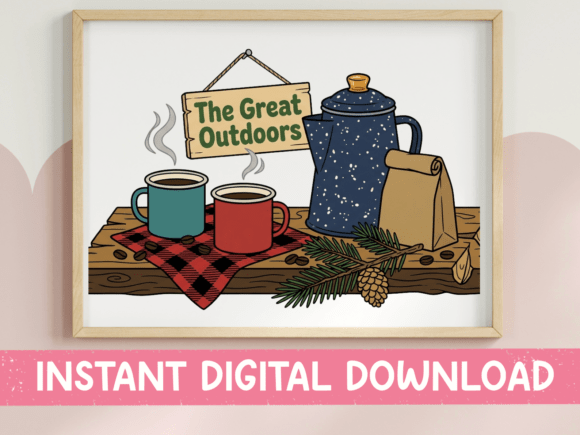
When you first look at The Great Outdoors Camp Coffee Design, it doesn’t just show objects—it evokes a feeling. That’s the mark of a well-composed graphic. The rustic wooden shelf, the two steaming enamel mugs in those classic teal and red hues, and the speckled navy percolator create an instant sense of cozy nostalgia. It’s not merely a collection of camping items; it’s a vignette that speaks to anyone who loves the simplicity of a brew under open skies. The layout feels balanced, not overly crowded, with a level of detail that suggests it will translate beautifully into stitches without becoming a dense, stiff patch on fabric.
For an embroidery designer, this first impression is crucial. It tells me this design isn’t just for t-shirts; its mood makes it a natural candidate for projects meant to feel personal and giftable. I immediately thought of it on a heavyweight cotton tote bag—the kind a customer would use for market trips or, fittingly, for carrying their own picnic supplies. The warm, handmade presentation it promises aligns perfectly with the values of craft businesses and Etsy sellers.
Where This Design Stitches Up Perfectly
In practical terms, The Great Outdoors Camp Coffee Design has a versatile personality. Its thematic core—the love for coffee and the outdoors—opens up a wide range of real-life embroidery applications beyond basic t-shirt designs.
Imagine it as a central motif on a soft, fleece-backed sweatshirt. The design’s warmth would complement the garment’s comfort, creating a high-value item for a small shop’s autumn merchandise lineup. For personalized gifts, a neatly stitched version on a high-quality apron transforms a simple kitchen item into a thoughtful present for a camping enthusiast or a wedding gift for a couple who loves the outdoors.
Baby clothes and nursery decor might seem unexpected, but for a family with an adventurous spirit, a smaller-scale version of this design on a baby blanket or a knit hat could be a charming and unique touch. As an embroidered patch, it would be superb. The clear shapes and distinct color blocks—the teal mug, the red mug, the wooden shelf—would maintain excellent stitching clarity when applied to a backpack or jacket, acting as a perfect embroidered patch for boutique branding.
For home goods, think pillow covers for a cabin-style living room or kitchen towels in a rustic kitchen. The design lends itself to products that tell a story, which is exactly what engages buyers in markets like craft fairs and online digital product previews.
A Scenario: Preparing a Custom Embroidered Tote
Let’s walk through a real case. A client requests a custom tote bag for their small coffee-roasting business to use at farmers’ markets. They want something that feels handmade and authentic. The Great Outdoors Camp Coffee Design comes to mind. The wooden shelf element adds a natural, organic texture, while the steaming mugs communicate the product itself—coffee.
My first step as a professional would be to test the embroidery file on a scrap of the same canvas fabric I plan to use. This is non-negotiable. I’d check how the details, like the speckles on the percolator and the steam lines, render with a fill stitch. Are they clear or do they blur into a dense block? I’d assess the required stitch density; too high on a tote bag can make it stiff, too low might lose definition. I’d also review the thread colors against my actual fabric, ensuring the navy, teal, and red have enough contrast to pop visually, enhancing the final product’s value and professional look.
Careful Considerations for Stitching Success
While the design is versatile, its successful application depends on mindful execution. Not every project is a good fit.
On small hoop sizes, the combined elements might become cramped, losing the breathing space that makes the composition pleasant. You’d risk the wooden shelf and mugs merging into a busy cluster. Similarly, on highly textured fabrics like terry cloth or looped towels, the finer details of the steam and mug handles could get lost in the fabric’s topography.
Working on thin or stretchy fabric like a standard t-shirt requires careful stabilizer choice to prevent puckering, especially in areas with potential dense stitching. For dark fabric backgrounds, the color palette needs evaluation; the navy percolator on a black garment might require a slight thread adjustment for visibility. Stitching on curved surfaces like caps presents a challenge with any design of this width; the horizontal shelf might distort if not carefully hooped and stabilized.
Ultimately, the design’s visual appeal and stitching clarity are its greatest assets for building customer trust. A clean, well-executed embroidery of this scene on a product signals quality and care, which translates directly to a handmade presentation that buyers appreciate. It supports brand consistency for a shop focused on rustic, nostalgic, or outdoor themes.
Essential Designer Notes Before You Hoop
Before committing this design to a client’s project or your own small shop product, a few practical checks are imperative.
- Always test on scrap fabric first. Match the fabric type, weight, and color as closely as possible to your final product.
- Review the design in black and white mockups. This helps you understand the pure composition and stitch areas without color influencing your judgment.
- Compare it on light and dark backgrounds. How does the color palette hold up? Does it need thread modifications for optimal contrast?
- Use the proper stabilizer. The fabric dictates this, not the design. A heavyweight tote needs one type, a stretchy baby onesie needs another.
- Inspect the small details. Zoom in. Are there tiny corners or lines that might require a specific stitch type, like a running stitch versus a satin stitch, to remain clean?
- Confirm the licensing terms. The product category is T-Shirt Designs and Graphics. Before selling finished items or using it in commercial embroidery projects, verify the usage rights. Is it for personal use only, or does it include commercial production? Never assume.
- Check the technical specifics. While the description provides a vivid visual, it doesn’t list exact stitch counts, file formats, or minimum hoop sizes. As the embroidery designer, you must acquire and review this data from the file itself or the seller before starting. This ensures your machine compatibility and project planning are sound.
Approaching The Great Outdoors Camp Coffee Design with this disciplined, practical mindset transforms it from a mere digital asset into a reliable foundation for beautiful, profitable finished products. It’s a design that, when stitched with consideration, tells a story that resonates—and that’s the core of a successful embroidery project.